

Get Your FREE Quote






Shutters
Frustrated with harsh sunlight ruining your comfort outdoors? There’s a fix for that.
At iQ Shutters, we provide premium awnings on the Sunshine Coast designed to enhance comfort, protect your home, and add style to your outdoor space.
Our expertly crafted window coverings offer shade, reduce heat, and create a more enjoyable environment for you and your family.
A sunny afternoon on the coast is hard to beat, but without proper shade, your patio or deck can quickly become unbearable.
Excessive heat, glare, and UV exposure can make it difficult to enjoy your outdoor areas, fading furniture and increasing energy costs.
iQ Shutters Advantage:
With years of experience in the industry, our skilled team specialises in custom solutions tailored to your needs. We use high-quality materials, ensuring durability and long-lasting performance.
Our commitment to exceptional customer service and superior craftsmanship makes us the trusted choice for Sunshine Coast homeowners.
Take control of your outdoor comfort today! Contact us today at (07) 5437 6405 or claim a fast and FREE quote online
On this Page:
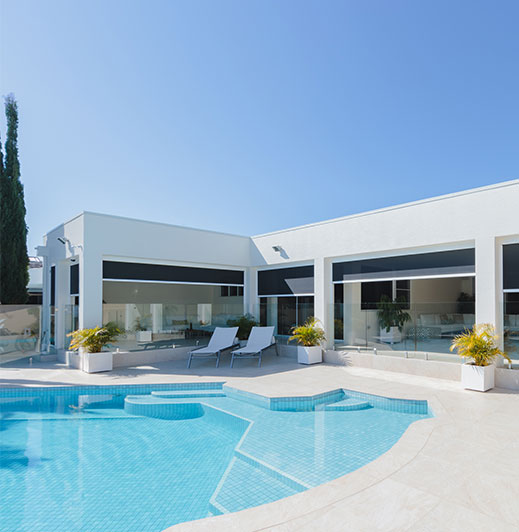

Zipscreen is the modern outdoor shade solution designed to bring comfort and style to Sunshine Coast homes. Perfect for patios, verandas, balconies, and large windows, Zipscreens provide year-round protection from sun, wind, rain, and insects while maintaining your view and airflow.
With widths up to 7 metres and drops of 5 metres, they can enclose even expansive outdoor areas with ease. Featuring sleek square cassettes, Dulux and Colorbond colour options, and powder-coated finishes, they blend seamlessly with any home’s exterior.
Built with coastal durability and smart z-LOCK technology, Zipscreens offer privacy, shade, and effortless operation for stress-free outdoor living.

Multi Stop Awnings are designed to lock in at any height, giving more control when adjusting for shade,privacy and visibility in your outdoor living area on the Sunshine Coast. This spring operated covering also has side channels which allow the bottom rail to smoothly run up and down within the channel. By twisting the bottom rail slightly in the channel, the awning easily locks into place at any position or height.
Perfect for installing into and an existing recess to create privacy and shade. Also ideal for installation above balcony railings end serveries. Optional pull down handle and end caps are available.

The Straight Drop Wire Guided Awnings offer a self-aligning system that guides the awning’s movement during extension and retraction. This creates a strong, practical and simple system with greater stability and control. Both motor and crank handle operations are available.
The covering has great style and is an excellent solution on the Sunshine Coast with robust strength and reliable operation.
Marine Grade 316 stainless steel cables hold the awning in place and when ordered with the stainless steel lock down latch set can be locked down to prevent movement in the wind. Stainless Steel tensioners are used to ensure the cable is taut.
An optional Aluminium Cassette Pelmet or Aluminium Weather Box is recommended if motors are installed and will protect the fabric when not in use.

Automatic Lock Arm Awnings can reduce up to 70% heat entering your house. This is essential for our warm Sunshine Coast environment. It is easily operated sf available in a wide range of fabrics and colours.

If you’re wondering whether these window treatments on the Sunshine Coast are the right choice for your home, consider these signs:
✗ Your outdoor areas are too hot to enjoy. If your patio, deck, or windows receive direct sunlight, you may find them unbearably hot during the day. These window furnishings provide much-needed shade, making these spaces comfortable year-round.
✗ Your energy bills are rising. Excessive sunlight streaming through your windows can heat up your home, forcing your air conditioning to work harder.These window furnishings help block heat, improving energy efficiency.
✗ Furniture and flooring are fading. UV rays can cause damage to outdoor and indoor furnishings over time. These window coverings protect your home’s interior and exterior from sun exposure.
✗ You want to enhance your home’s aesthetic and functionality. They not only provide practical benefits but also improve the overall look of your property, adding value and style.
If any of these frustrations sound familiar, it’s time to explore your options! Contact iQ Shutters for expert advice and a tailored solution.
The cost on the Sunshine Coast varies based on factors such as material, size, operation type, and additional features. Here’s a general overview of pricing ranges:
| Type | Material | Operation | Average Cost Range |
| Basic Manual | Polyester | Manual | $500 – $1,000 |
| Canvas | Manual | $1,000 – $1,500 | |
| Mid-Range | Polyester | Motorised | $1,500 – $2,500 |
| Canvas | Motorised | $2,000 – $3,000 | |
| High-End | Acrylic | Motorised | $3,000 – $4,500 |
| Aluminium | Motorised | $4,000 – $5,500 | |
| Customised Solutions | Varies | Varies | $5,000 and above |
PLEASE NOTE: These prices are indicative and can vary based on specific requirements and suppliers.
Ready to learn more? Contact us today for a personalised quote or to schedule a consultation.
The installation times on the Sunshine Coast depend on several factors, including the type of awning, customisation requirements, and supplier workload. Here’s a general timeline:
Installation itself usually takes a few hours to a full day, depending on the size and type of awning. However, delays can occur due to weather conditions or supplier demand.
For an accurate estimate based on your specific needs, contact iQ Shutters today for a personalised consultation!
Choosing the right provider is essential to ensure durability, style, and value for your investment. Here’s what to look out for.
Take control of your outdoor comfort today! Contact us today at (07) 5437 6405 or claim a fast and FREE quote online
The Sunshine Coast’s warm, sunny weather and occasional heavy rains require durable, UV-resistant, and weatherproof window treatments. Here are the best options:
Ideal for flexibility, they let you enjoy the sun when desired and provide shade when needed. Motorised options make operation effortless.
Made from aluminium or steel, they are highly durable and low-maintenance, perfect for year-round weather protection.
They are great for entertaining areas, offering shade without the need for poles or support structures.
Designed for patios and verandahs, they provide wind, rain, and sun protection while maintaining an open-air feel.
A cost-effective option, they block UV rays and help keep indoor spaces cooler. Look for fade-resistant, waterproof materials for a longer lifespan.
Installation on the Sunshine Coast typically requires obtaining a development building work permit. If you’re unsure, reach out on (07) 5437 6405 for advice and support from a member of our team.
Proper maintenance is key to keeping your window coverings on the Sunshine Coast looking great and functioning well despite the region’s sun, wind, and occasional storms. Follow these simple steps:
Humidity can encourage mould growth. Ensure awnings are completely dry before retracting them, and use a vinegar-water solution to spot-clean any mildew.
Inspect frames, joints, and mounting points for rust, loose bolts, or wear and tear. Address small issues promptly to prevent costly repairs.
For retractable awnings, always roll them in during storms or strong winds to avoid damage.
A professional inspection once a year helps ensure your awnings remain in top condition.
Yes — awnings make a noticeable difference to indoor temperatures, especially on the Sunshine Coast, where strong sun and humidity are part of daily life.
Here’s why they work so well:
The best coastal-grade awnings are those designed to handle salt air, wind exposure, and intense UV without breaking down over time.
Here’s what we recommend based on real coastal installs:
Yes — quality awnings are wind-rated and well-suited to Sunshine Coast conditions, as long as they’re designed, specified, and installed correctly.
Here’s what that means in practice:
Yes — awnings play a big role in protecting outdoor furniture from fading and weather damage.
Here’s how they help:
The main differences come down to how they operate, how much flexibility they offer, and where they work best. Here’s a clear breakdown to help you choose the right option:
These are fully retractable awnings that extend outward using folding arms and sit flat against the wall when not in use.
Best for: Flexible outdoor living spaces and entertaining areas where openness matters.
Drop arm awnings extend outward and down at an angle, creating shade while still allowing airflow.
Best for: Window shading and heat control without fully blocking light or air.
Fixed awnings are permanently set in place with no moving parts.
Best for: High-exposure areas, strong sun zones, or homes wanting a set-and-forget solution.
Yes — awnings can absolutely be motorised and automated, and adding wind and sun sensors is one of the smartest upgrades you can make, especially on the Sunshine Coast.
Here’s how it works:
Awnings don’t always require council or body corporate approval in QLD, but in some situations, approval is required, and it’s important to check before installation.
Here’s how it generally works:
For most standard residential homes, awnings are considered a minor building addition and often do not need council approval, provided:
However, approval may be required if:
If your property is under a body corporate, approval is almost always required, even for small awnings. This is because:
Body corporates may also request:
In coastal environments like the Sunshine Coast, well-made awnings typically last 10–15 years, and often longer, when the right materials are used and they’re properly cared for.
Here’s what determines awning lifespan near the coast:
Coastal longevity depends heavily on:
Awnings are generally low-maintenance, but like anything exposed to the elements — especially in Sunshine Coast coastal conditions — they do benefit from simple, periodic care rather than ongoing servicing.
Here’s what to expect:

The service was great, it was so easy!…Very good staff, and everything got done quickly. It looks great, I love it. Very happy with iQ Shutters!
– Anne and Peter Edwards

 iQ Shutters


